
How artificial intelligence is changing the way we learn literature
Oct 30, 2025
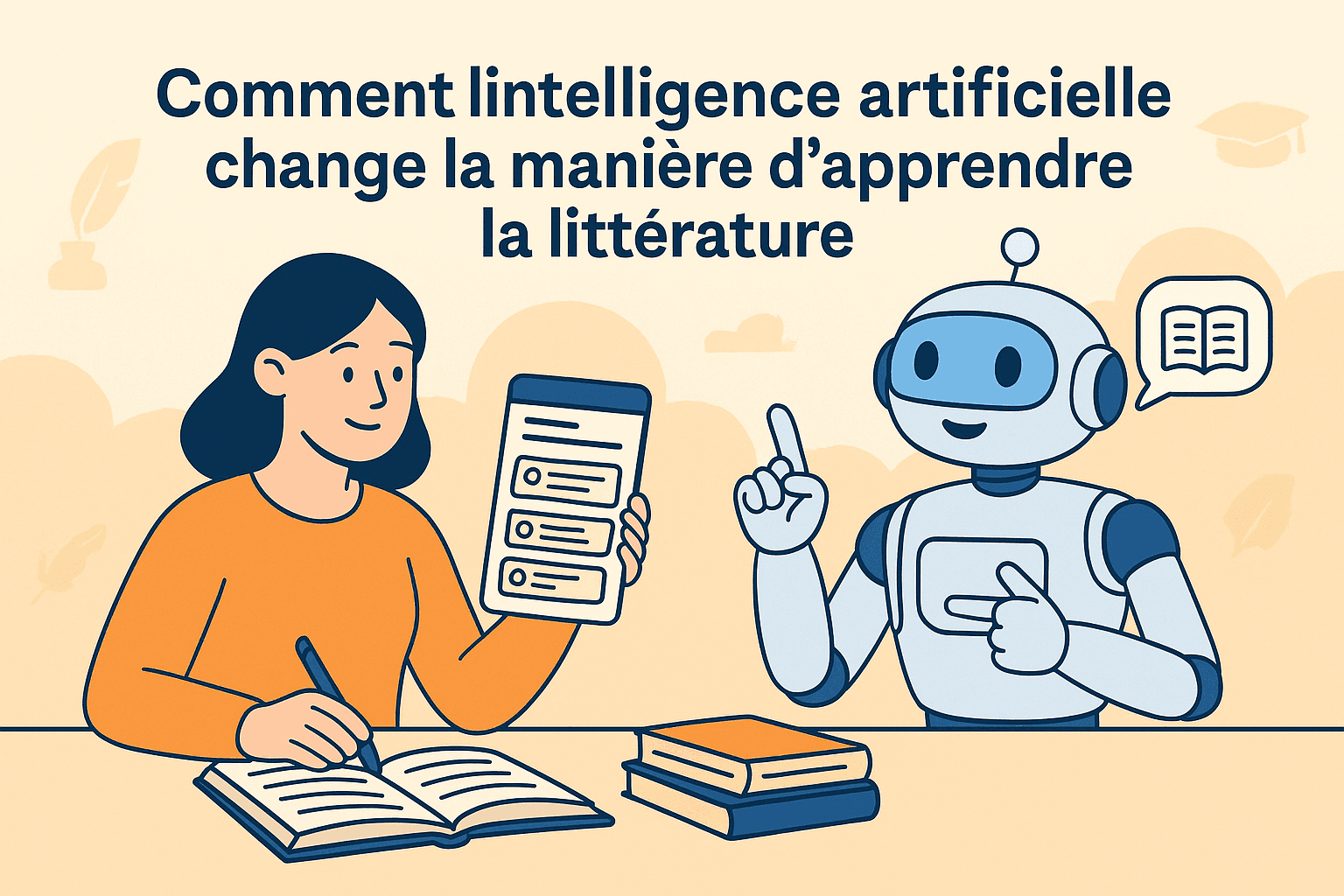
Introduction: Literature in the Age of AI
You might think that artificial intelligence is mainly for engineers or geeks. However, it is now making its way into an unexpected field: literature. Reading, analyzing, understanding, memorizing entire works... all of this can now be facilitated by AI.
So how are these new technologies transforming the way we learn literature? Is it a gadget or a real revolution? Spoiler: it's a bit of both.
1. Artificial intelligence, a new ally for literature students
There was a time when reviewing a literature course meant spending hours filling in, highlighting, and re-reading dense passages. Today, artificial intelligence tools completely change the game.
With just a few clicks, you can ask an AI to:
summarize a complex text,
analyze an author's style,
or even explain the symbolism of a literary passage.
Tools like ChatGPT, Perplexity, or Koro AI allow you to transform passive reading into active learning. You understand better, faster, and retain more. In short, AI becomes your personalized revision assistant — always available, never tired.
2. When AI revolutionizes revision and understanding of works
Imagine: you have to review The Flowers of Evil, Madame Bovary or The Red and the Black. Instead of endlessly rereading your textbook, you can ask an AI specific questions:
“Explain the vision of society in Madame Bovary.”
“Give me a quiz on the metaphors in Baudelaire.”
Result? You work tailored to you, at your own pace, with tools that make your revisions lively.
You can also automatically generate revision cards, thematic summaries, or even interactive flashcards. Literary analysis becomes clear, structured, and especially much more engaging.
3. Personalized learning: AI that adapts to your brain
This is probably one of the greatest contributions of artificial intelligence: adaptation.
AI detects what you grasp well… and what you forget too quickly. It revisits concepts at the right time (the “spaced revision” technique), helps you progress step by step, and encourages you with motivating micro-goals.
👉 Result: you no longer revise in a “generic” way; you revise in your own image.
It’s as if your personal tutor knows your strengths and weaknesses, but is available 24/7.
4. The limits to keep in mind
However, be careful not to fall into complacency. AI is a tool for assistance, not a substitute for personal reflection.
It can make mistakes in its interpretations.
It does not always grasp literary sensitivity, subtext, or an author's irony.
And above all, it will never replace your critical eye, your subjectivity, and your style of analysis.
The challenge is to use it as a springboard, not as a crutch.
5. Spotlight on Koro AI: intelligent and fun revision
If you want to see what AI can truly bring to your literature studies, Koro AI is an excellent entry point.
You can upload your literature courses, and the application automatically creates clear cards, quizzes tailored to your level, and even funny comments at the end of each session.
Everything is designed to make revision smoother, more visual, and especially more motivating.
Because learning Phaedra or Les Misérables should not be synonymous with boredom.
Conclusion: Literature, between tradition and innovation
Artificial intelligence does not replace teachers or classics. It does not “think” for you; it helps you think better.
By making revision more interactive, more focused, and more fun, it allows everyone to rediscover the pleasure of learning, even in the most demanding subjects.
Literature remains a human adventure, but AI becomes its best digital guide.