
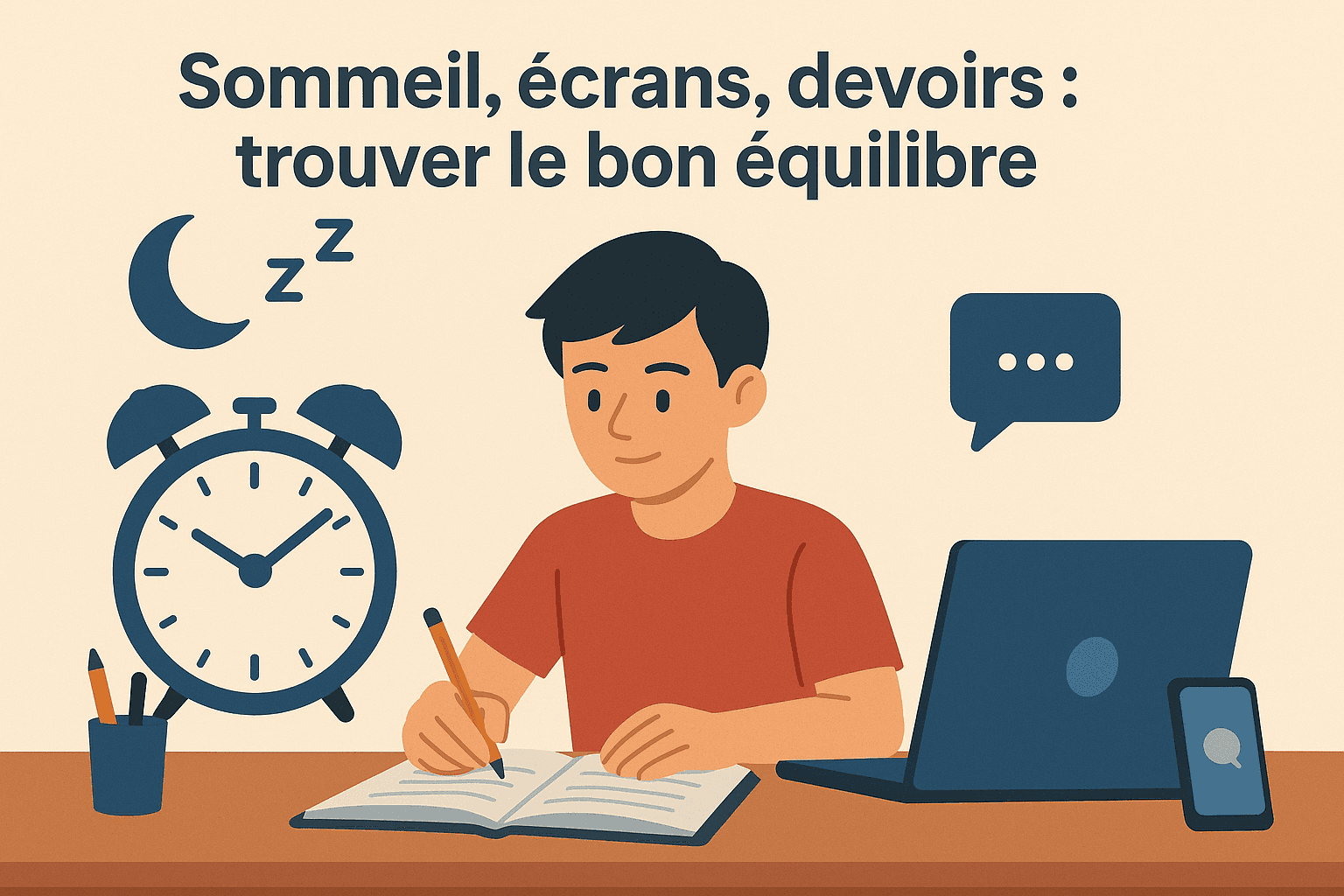
Sleep, screens, homework: finding the right balance
Nov 2, 2025
Introduction
Have you ever found yourself studying until 1 AM, your eyes glued to the screen, before falling asleep with your phone in hand?
Welcome to the life of a modern student: between assignments, screen time, notifications and lack of sleep, maintaining balance can quickly become a real headache.
And yet, it all hinges here: a good sleep rhythm, smart management of your screens, and a clear organization of your studies can literally change your productivity and well-being.
Here's how to find your balance, without sacrificing your nights or your grades.
1. Sleep: the fuel for your memory
You’ve probably heard this before, but it’s scientifically proven: sleep plays an essential role in memory consolidation and concentration.
When you sleep, your brain sorts through the information learned during the day, eliminates the unnecessary, and stores what matters.
👉 Less sleep = less memory = less effective studying.
The signs of sleep deprivation are easy to spot: fatigue in the morning, difficulty concentrating in class, irritability, or drowsiness during your studies.
For an optimal student sleep schedule, aim for 7 to 9 hours of sleep per night, going to bed at regular hours.
💡 Tip: create a “disconnection” ritual 30 minutes before bed. Turn off your screens, avoid TikTok videos “just before sleeping,” and replace your scrolling with a gentle podcast or a short reading.
And if you're tired in the afternoon, a short nap (15 to 20 minutes max) is your ally. It improves memory and productivity without disrupting your rhythm.
2. Screens: between allies and enemies
Screens are an integral part of your student life: you work on your computer, you chat on your phone, you study on your tablet.
But excessive screen time directly harms your sleep and concentration.
The blue light emitted by screens disrupts the production of melatonin, the sleep hormone. As a result, your brain thinks it’s still daytime.
And your Instagram feed or your WhatsApp messages don’t really help you unwind.
🧠 To limit negative effects:
Activate the night mode or a blue light filter on your phone and PC.
Set up a no screen zone (for example, no screens 30 minutes before sleeping).
Eliminate unnecessary notifications or use a “focus” mode while you work.
Install an app to measure your screen time and set goals.
Taking a digital detox from time to time, even a day without social networks, will help you regain mental clarity and a genuine digital disconnection.
3. Assignments and studying: the art of consistency
Cramming at the last minute is the best way to stress and quickly forget.
The key is consistency. A little each day is better than a marathon of notes the night before the exam.
Here are some simple guidelines:
Work in blocks of 45 to 60 minutes (the Pomodoro method).
Take regular breaks without a screen.
Plan your week with specific times for assignments and studying.
Set small, achievable goals instead of endless days.
To learn more effectively, focus on active methods:
👉 Active recall (testing yourself regularly),
👉 Flashcards,
👉 and summary notes .
It’s scientifically proven: these methods boost long-term memory and help you retain your lessons better.
4. Finding your balance: a question of habit
The balance of student life does not come overnight. It’s a matter of lifestyle habits and simple routines to instill.
🕒 Try to get up and go to bed at fixed times.
🥗 Eat a balanced diet and hydrate often (the brain loves water!).
🚶♂️ Move a little every day, even 20 minutes of walking.
📵 Keep moments without screentime to clear your mind.
You’ll see that in just a few days, your concentration, motivation, and well-being improve.
The secret is not to control everything, but to be consistent without judging yourself.
5. The clever tool to help you stay on track (Koro AI)
What if a tool could help you study more effectively, without spending your evenings on your phone or getting lost in your notes?
Koro AI is a fun and ultra-intuitive application that lets you upload your courses (PDFs, photos, files…) and automatically transforms them into study notes and custom quizzes.
At the end of each quiz, you receive a little funny comment and goals to achieve, to keep you motivated throughout the week.
It’s a simple way to study with pleasure, improve your memory, and above all, save time for your sleep and personal life.
In short, Koro AI helps you learn better, without wearing you out.
Conclusion: balance = sustainable performance
Sleep more, scroll less, work better.
The perfect balance between sleep, screens and assignments is what allows you to perform without collapsing.
So instead of aiming for perfection, aim for stability.
Do a little each day, listen to your body, respect your sleep and concentration.
You’ll see: being a productive student isn’t about doing more, it’s about doing better.
And where do you find yourself between napping, studying, and evening scrolling? 😄