
Top 5 methods for effective group studying
Nov 21, 2025
Introduction
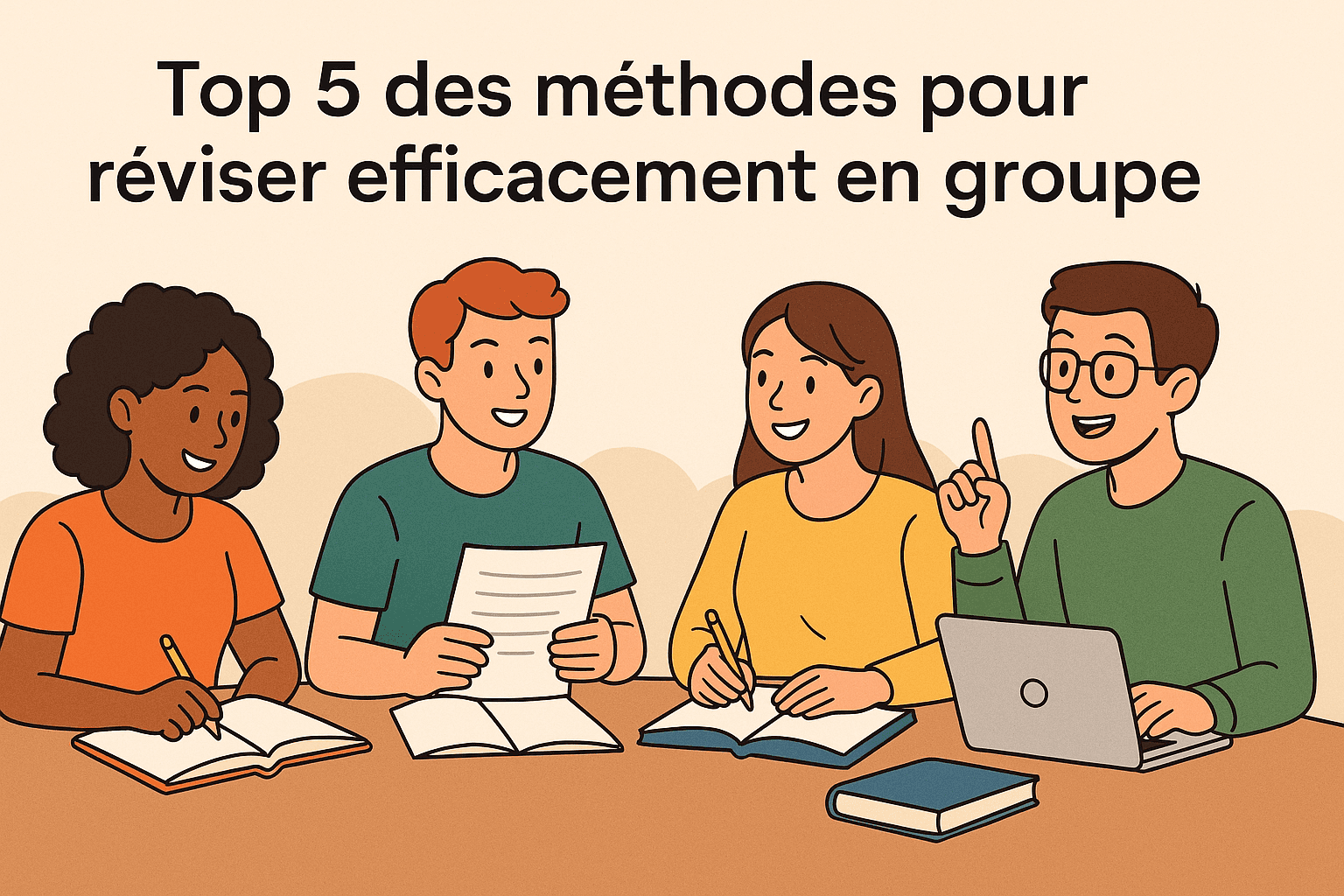
Studying in a group can be a powerful weapon when done right… or a disaster when it turns into chatter. However, working efficiently in a group is one of the most powerful levers to boost your motivation, understand faster, and memorize sustainably. Provided you have a real method.
If you want to transform your collective study sessions into productive meetings and raise your average, here are the 5 best group study methods, tested, optimized, and adapted to student life.
1. Define a clear objective for each session
The main reason for failure in group revisions is the lack of an objective. You gather, discuss, and… nothing progresses. To study in a group without wasting time, always set a single, precise objective.
Examples:
master an entire chapter
do ten targeted exercises
finalize a common revision sheet
prepare a mock exam topic
This objective must be shared by everyone. You’ll see: as soon as a clear goal is defined, collective motivation increases. Conversely, the "we’ll see on the spot" approach almost systematically leads to useless sessions.
Small tip: choose an achievable objective in one session to boost student productivity and avoid dispersion.
2. Distribute tasks according to everyone’s strengths
The strength of group study is the complementarity. To revise effectively with your friends, distribute tasks based on what each person excels at.
For example:
the one who is comfortable in economics creates a mindmap
the one who understands methodology well explains the structure of the assignment
the one who memorizes quickly summarizes the essentials for others
This creates a collaborative revision that is very powerful.
You can also try the reverse tutoring technique: each person must explain a specific point to the group. It’s one of the best methods for group study because teaching a concept allows you to memorize twice as fast.
3. Use active methods to avoid passivity
The best group revision sessions are those where you participate actively. No sitting and listening without doing anything.
Here are the most effective active methods:
quick quizzes
mini-timed challenges
verbal explanations
brainstorming
creating shared revision sheets
collaborative diagrams (mindmaps)
These techniques transform a simple collective study session into a true engine of learning. The more you manipulate information, the better you grasp it.
Bonus effectiveness: practice “teach back”: one group member explains, another rephrases. This avoids passivity and reinforces retention.
4. Organize a clear framework: duration, breaks, and anti-distraction rules
Even with the best intentions, studying together can quickly go off track. To avoid distractions, you need to structure the session.
Try this format:
45 minutes of focus
10 minutes break
no phones on the table
neutral and quiet place (library, empty room…)
Keep in mind that a productive group work session primarily depends on time management and adherence to a few rules. The clearer the framework, the more focused the group remains.
5. Centralize resources to save a lot of time
The classic mistake: everyone brings their lectures, their versions, their notes… and no one has the same. Result: total confusion.
The solution: create a common revision library.
You can use Notion, Drive, or another collaborative tool.
Objective:
gather the revision sheets
compile the exercises
share the summaries
create a common space for all courses
This method streamlines all collaborative work and avoids wasting time. No more searching through ten different folders.
Bonus: how AI can boost your revision group (very subtle version)
When working in a group, AI can become a real facilitator. An application like Koro AI allows you to upload a single course and automatically obtain:
interactive quizzes
summaries
personalized objectives
Useful when your group needs common supports without wasting an hour organizing everything. The quizzes can even be used to energize your sessions in a fun format.
It’s not mandatory, but it’s a real time-saver when you want to revise effectively in a group.
Conclusion
Studying in a group can become your most powerful strategy to succeed in your exams… if you organize your sessions intelligently. By defining an objective, distributing roles, using active methods, framing the session, and centralizing your resources, you will transform each session into real productivity.
Test, adjust, find your style. A good collective study session is a balance between seriousness, mutual support, and a motivating atmosphere.