
How to help your teenager prepare for the exam without stress
Nov 14, 2025
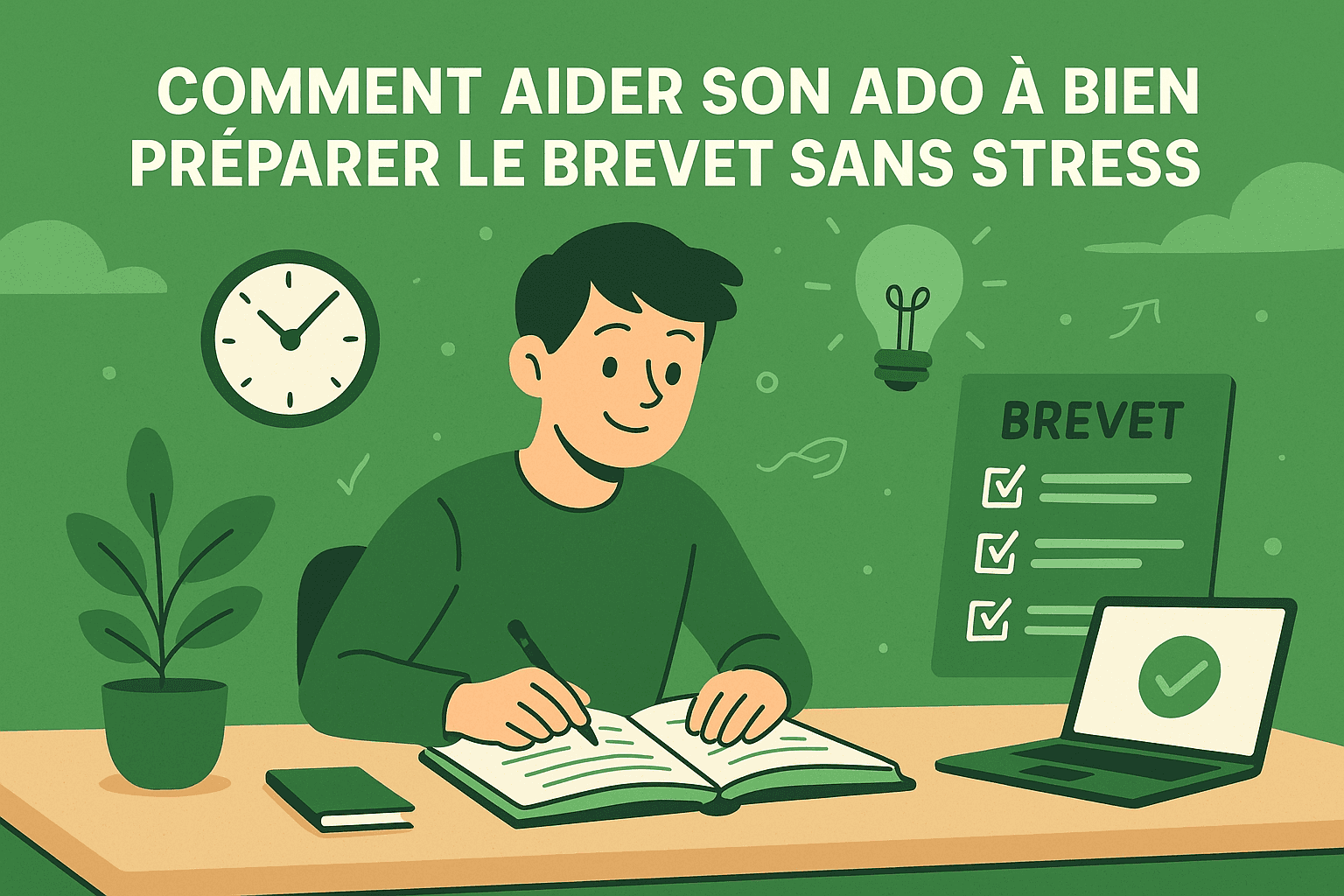
Introduction: The exam, an important step but not a nerve-wracking ordeal
The exam is approaching and, let's be honest, you are probably feeling a little mix of motivation and panic. Between reviewing, the fear of forgetting something, and the famous phrase "I need to get started," this time can quickly become stressful. But don’t panic: well preparing for the exam doesn't mean locking yourself in the books from morning till night. With the right method, a bit of organization, and some tips, you can review effectively while keeping your calm.
1. Understand the stakes of the exam without making it a mountain
The national diploma marks the end of middle school. It assesses your knowledge in French, math, history-geography, science and moral and civic education. In short, everything you have learned during your years in middle school.
But contrary to what you might think, it is not an insurmountable test. The exam is mostly a first experience of testing, a kind of rehearsal before the high school diploma.
The most important thing is not to aim for the perfect grade, but to learn to work effectively and to manage your stress. If you understand that this is a training step, you will approach the exam with much more serenity. In short, the exam is not a verdict: it is an opportunity to prove to yourself that you can succeed with method.
2. Establish a true revision organization
A good organization is the foundation for a successful exam preparation. Start by creating a clear revision schedule that helps you stay focused.
The idea is not to work ten hours a day, but to be consistent. For example: two subjects in the morning, one in the afternoon, with real breaks between sessions.
Alternate the subjects you master well with those where you want to progress, to maintain morale and a sense of advancement. Note relaxation moments, outings, and sports in your schedule. Yes, that’s important too!
An effective revision method is one that you stick to over time. And above all, remember: you don’t need to do too much, but to do it well.
3. Create a work environment that motivates you
Your revision space directly influences your concentration. If you work on your bed with your phone within reach, you will be distracted in five minutes.
Set up a calm and pleasant corner for yourself: a tidy table, some natural light, a bottle of water, and all the materials you need.
Also try to have fixed hours, like at school. Your brain loves routine: if you revise every day at the same time, it will automatically switch to “focus” mode. And when you feel tired, don’t push yourself. It’s better to have one hour of concentrated work than three hours staring at your lesson without understanding.
4. Learn to manage your stress before the exam
This is probably the trickiest part: managing stress before the exam.
You might feel unprepared, as if you've forgotten some concepts, or that you're not up to the task. That’s normal. Everyone feels this way, even those who have reviewed very well.
The key is to learn to channel your stress rather than trying to make it disappear.
Breathe deeply, sleep well, eat balanced meals and keep doing some sports. These are small details that make a huge difference.
And above all, don’t compare yourself to others. Everyone revises differently. What matters is your progress, not your speed.
You can also train under real conditions: do a full exam subject at home, time yourself, and correct yourself. You will see, confidence will come naturally.
5. Make revisions more fun and effective
You don’t have to spend your evenings highlighting endless lessons. There are more fun revision methods that are much more effective.
You can create revision cards that synthesize information, make quizzes to practice, use flashcards or even revise with a friend.
Changing formats helps your brain retain information more easily and makes revision less monotonous.
The important thing is to learn to have fun while reviewing. Yes, it’s possible! By varying the media (visuals, audio, written), you engage different areas of your brain, which strengthens memory. And above all, you make learning more enjoyable, hence less stressful.
6. Koro AI: your partner for stress-free revision
If you want to go even further, you can rely on Koro AI, a playful and ultra-intuitive revision aid application.
You can upload your courses (photos, PDFs, Word documents…) and Koro AI automatically creates revision cards, personalized quizzes and even goals to achieve.
Each quiz comes with a small humorous comment to motivate you and keep you wanting to continue.
It’s a simple and fun way to revise for the exam without stress, all while keeping a light head. Koro helps you turn your courses into interactive tools, and learn at your own pace, without putting pressure on yourself.
7. The last days before the exam: final preparations
As the tests approach, the watchword is: don’t exhaust yourself.
In these last days, stick to reviewing your essential notes, doing some exam-type exercises, and above all, avoiding last-minute revisions.
You must arrive rested, confident, and with a clear mindset. Trust your work. You have revised, you have prepared, and you have progressed. Now, all that’s left is to give your best.
Conclusion: Learn to trust yourself
Preparing for the exam is a bit like an endurance race: what matters is not to go fast, but to go far without burning out.
With a good organization, intelligent stress management and tools like Koro AI, you can really revise effectively without stress.
So breathe, keep confidence in yourself, and remember that this is just a step.
You are ready. You have worked hard. And you will succeed.